Nobody writes the impact report on the day it’s due.
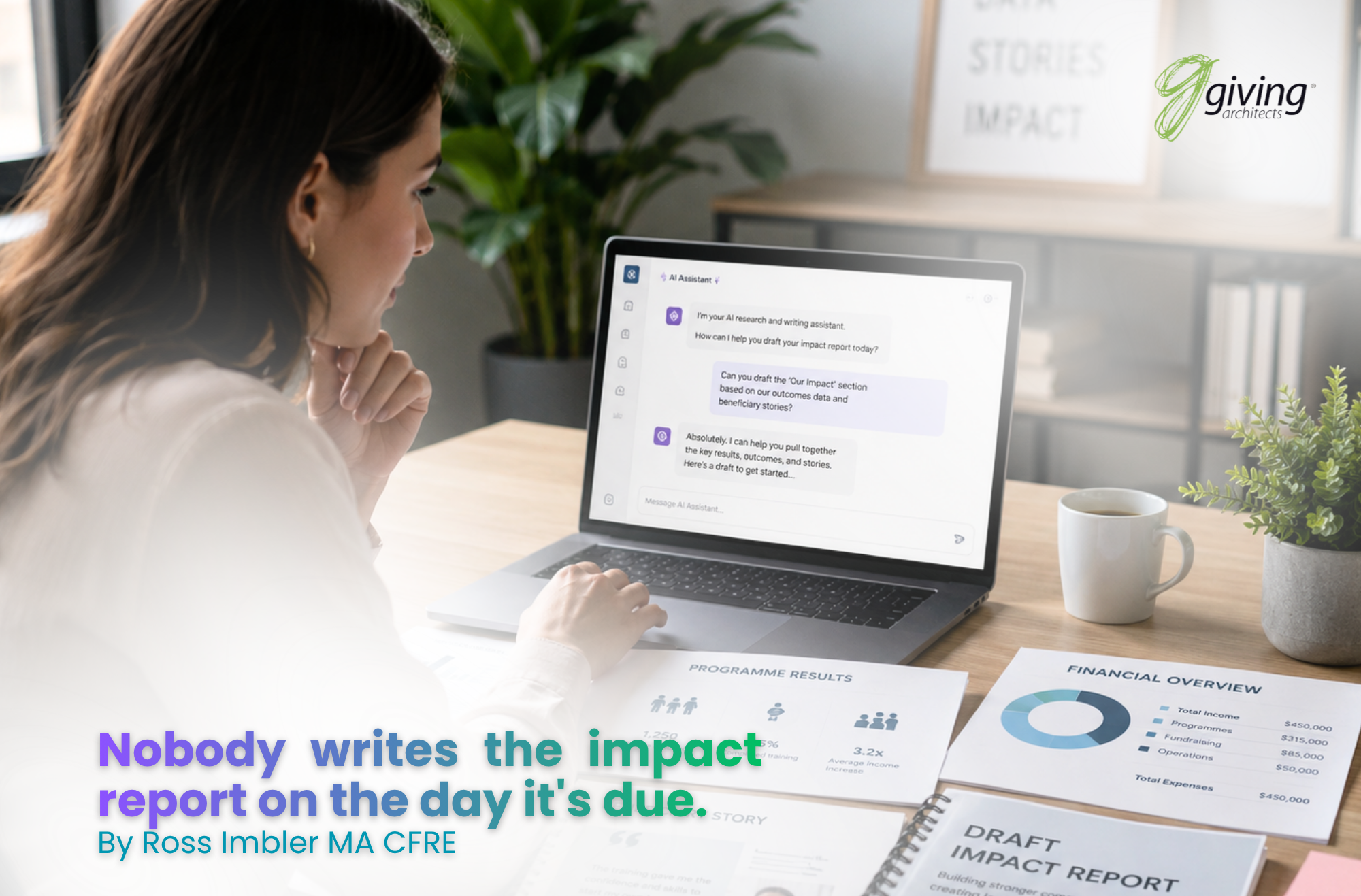
By Ross Imbler MA CFRE | Associate – Giving Architects Intelligence
Every fundraiser who has produced an impact report knows the discipline. Before a word is drafted, before a layout is chosen, before a photo is selected, the report has to be built. Not written; built. You gather the outcomes data, pull the programme evidence, check the financials, collect the consented stories, and make sure everything adds up to a picture that’s accurate and worth reading. The writing comes last.
Most fundraisers using AI for the first time get this the wrong way around.
They open a chat window, describe what they need, and expect something useful to come back. A funder report. A donor update. A programme summary. An annual review. Sometimes the result is impressive. More often it’s generic, slightly off, or confidently wrong in ways that are difficult to identify unless you already know what the right answer looks like.
The instinct is to assume the question wasn’t good enough, and to wonder how to ask differently. But the question is rarely the problem. The prompt matters, but it cannot compensate for a weak foundation. What’s missing is the preparation you would have done before writing.
An impact report isn’t just organised information. It’s an argument in service of a specific purpose, for a specific audience, towards a specific goal. And that audience context matters, because donors do not all define impact in the same way. One may be motivated by measurable reach and efficiency; another by long-term systems change, personal stories, community leadership, or the opportunity to help solve a specific problem. A strong impact report does more than describe what happened. It connects the evidence back to the reasons the donor chose to give in the first place. When the outcomes, stories, and proof points reflect those motivations, the report becomes more than an accountability document. It reassures the donor that their decision was well placed, deepens their connection to the work, and creates a stronger foundation for the next conversation.
That connection is hardest to earn when the results are mixed. AI will often make an imperfect outcome sound cleaner than it was, but donors can usually tell when a report is smoothing over what really happened. A clear account of what fell short, why it happened, and what will change next builds more trust than a report that presents every activity as an unqualified success.
Getting either right – the polished results or the honest account of what didn’t work – depends on the same thing. The report has to be assembled from the right sources: outcomes data from the programme, financial information, consented beneficiary stories, evidence that the intended change actually happened, and honest reflection on what didn’t. Some sources carry the numbers. Some carry the narrative. Some carry the proof. The skill is knowing which is which, and how they fit together into a single coherent story.
That is exactly the preparation AI needs before it can help.
Consider asking AI to help draft sections of an impact report. A fundraiser who brings the programme’s outcomes data, the financial acquittal, a summary of key activities, a handful of quotes that have been consented for use, and a clear brief on what the funder cares about will get drafts that reflect the actual work. The AI has what it needs. It knows what’s current, what’s authoritative, and what the story is trying to convey.
A fundraiser who uploads a mixed folder of old activity reports, last year’s numbers, and a strategic plan that no longer matches what the programme actually does, then types ‘write an impact report for our funder,’ will get something that looks like an impact report and reads like one. It will be structured correctly, use the right language, and cover the expected ground. It will also have invented the specifics, averaged out the conflicting notes, and produced something that requires more work to fix than it would have taken to write from scratch.
The difference isn’t the prompt. It’s what came before it.
Even a well-prepared first draft is just that: a first draft. What comes back from AI needs testing against what you already know, against what your colleagues would flag, against how the funder will read it. AI can accelerate the drafting. It cannot replace the review that turns a draft into something ready to send.
The discipline the impact report represents applies to every AI task a fundraiser might take on. What sources are you working from, and are they current? What context should stay out because it’s confidential, unverified, or shouldn’t be handed to a public AI? Once you have a draft, what needs to be checked before it goes anywhere consequential? A fundraiser who can answer those questions before engaging AI, and again before acting on what comes back, will consistently get output that reflects what the organisation actually does.
None of this should feel unfamiliar. The discipline of gathering evidence, drafting a story, and checking it against reality before sending it to a funder is baked into how good fundraising works. It’s what separates a report that strengthens the funder relationship from one that quietly erodes it. Applying that same instinct to AI isn’t a new skill. It’s the oldest skill in the profession, in a new context.
Build the report before you write it. Know what you have, know what’s missing, and be clear about what you’re trying to convey. Whether you’re writing it yourself or asking AI to help, the preparation is what makes the report accurate. Understanding the donor is what makes it meaningful. Together, they strengthen the relationship.