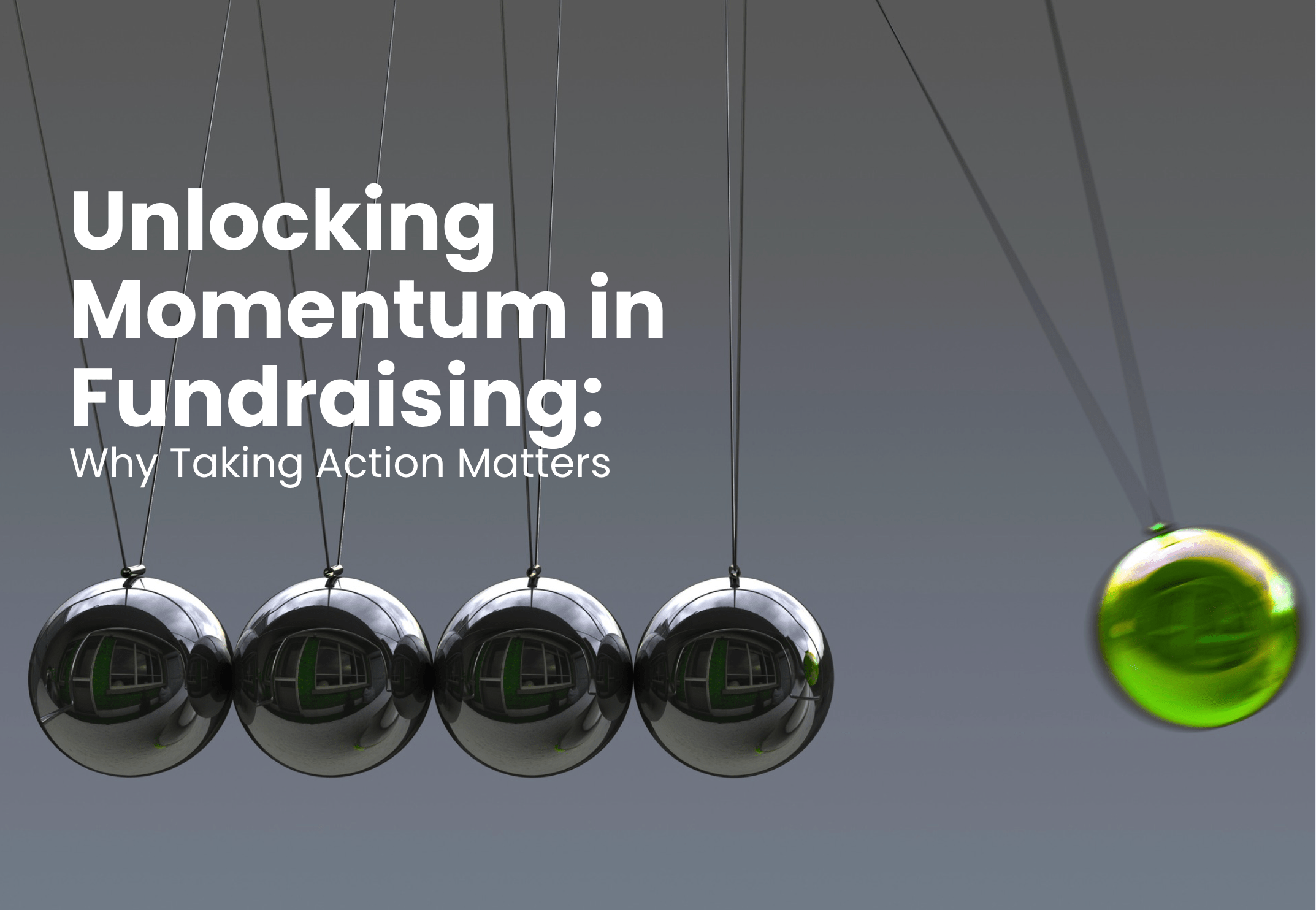
Unlocking Momentum in Fundraising: Why Taking Action Matters
from the team at Giving Architects
In fundraising, timing matters.
Decisions like when to launch a campaign, which audience to engage, how much to invest, and what message to prioritise all shape your ability to raise support. But often, teams delay. They wait for the right moment, more clarity, or just a little more confidence before moving forward. It feels like a sensible, low-risk approach. In reality, it can quietly hold an organisation back.
Choosing not to act, even temporarily, is still a decision. And sometimes it comes with a cost. While teams prepare or debate, opportunities may pass by unnoticed. A strong strategy that never gets implemented doesn’t generate results. It’s like a boat that remains in the harbour – safe, but going nowhere.
It’s natural to want certainty before making big decisions. No one wants to misfire or waste resources. But the clarity we often hope will appear with time doesn’t always arrive. More often, delays lead to lost opportunities, reduced momentum, and added pressure down the track.
When Delays Create Drag
When campaigns are postponed, donors can be lost. Supporters tend to give when timing, relevance, and emotional connection align. Wait too long, and that alignment may fade. They may have given elsewhere or moved on entirely.
Delays also affect internal energy. Fundraising teams thrive on momentum. Without action, motivation can dip, and it becomes harder to reignite progress. Pressure builds too, especially when timelines tighten and teams are left scrambling to meet goals at the last minute. Rushed campaigns often come with higher costs and heavier workloads.
These pauses can also create uncertainty among stakeholders. Donors, board members, and partners pay attention to consistency and follow-through. If activity stalls for too long, it may raise questions about direction or confidence.
There is also the risk of overwhelming your donors unintentionally. A delayed campaign often turns into an urgent one, with messaging that feels reactive or overly intense. Instead of feeling engaged, supporters may feel pressured, which can lead to donor fatigue over time.
And then there is the cost you can’t easily see. Opportunity cost. A delayed campaign might still raise funds eventually, but the months lost could have meant real impact on services delivered, people supported, or further investment unlocked.
A Shift Towards Steady Action
Often, it’s the pursuit of perfection that holds teams back. Campaigns are refined, reworked, and delayed in the hope of launching at just the right moment. But more often than not, a well-executed campaign launched on time will outperform a flawless one that comes too late. Taking action creates momentum, generates feedback, and fuels learning. Perfection, by contrast, can quietly slow things down.
A shift in mindset can make all the difference. Instead of trying to eliminate every risk, focus on managing risk with intention. Rather than waiting for the perfect plan, start with what’s ready. Progress, even when incremental, builds confidence and keeps things moving forward.
Organisations that take consistent, purposeful steps toward their broader strategy are far more likely to connect with supporters, strengthen relationships, and deliver meaningful impact. The cost of inaction may not be immediately obvious, but over time, it compounds.
So if you’re sitting on a plan that’s nearly there, this is your reminder: you don’t need to have it all figured out. The next step doesn’t have to be big – it just needs to be in the right direction.